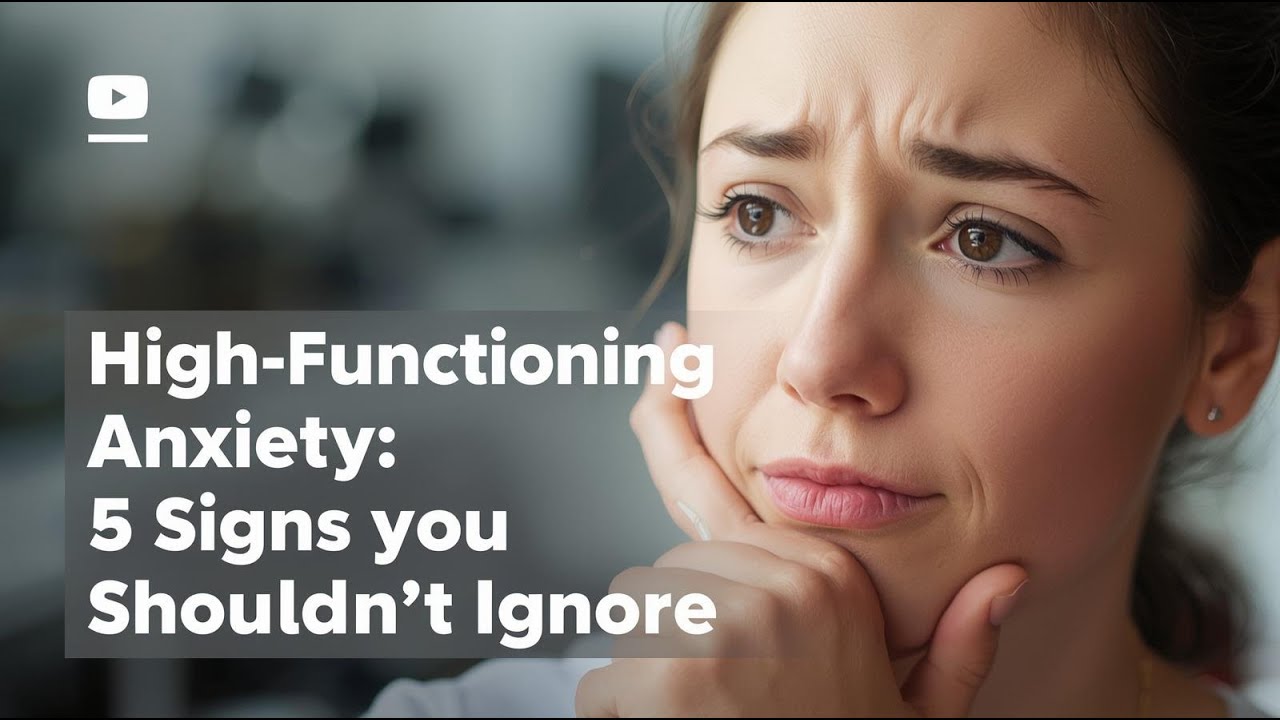
How does GAD Differ From Normal Worry (Generalized Anxiety Order Milledgeville Georgia)
November 27, 20262:46
Summary
In this video, DPS Health & Wellness presents "How does GAD Differ From Normal Worry (Generalized Anxiety Order Milledgeville Georgia)". 📘 Get Your FREE Guide: Mental Health Made Simple 👉 https://www.dpshealth.slimuniverse.com/join_newsletter/ Join the DPS Health & Wellness Newsletter and receive your free downloadable guide plus ongoing mental health and wellness tips from Dr. David Samuels. This educational resource covers topics related to anxiety, offering insights into mental health treatment options, coping strategies, and approaches to wellness. The content is designed to help viewers better understand anxiety and make informed decisions about their mental health care.
Original video description
📘 Get Your FREE Guide: Mental Health Made Simple
👉 https://www.dpshealth.slimuniverse.com/join_newsletter/
Join the DPS Health & Wellness Newsletter and receive your free downloadable guide plus ongoing mental health and wellness tips from Dr. David Samuels.
👉 https://www.dpshealth.slimuniverse.com/join_newsletter/ https://www.dpshealthandwellness.com
How does GAD differ from normal worry?"
Today, we're diving into a topic that affects many of us
at some point in our lives – worry. But, there's a distinct line between
normal worry and something more persistent, like Generalized Anxiety Disorder, or GAD.
Here are some of the differences:
1. Duration and Intensity:
Normal worry is fleeting and proportional to the situation. GAD, on the
other hand, involves excessive, chronic worry that can last for months,
often about various aspects of life.
2. Impact on Daily Life:
Normal worry might make you a bit uneasy, but it doesn't typically interfere
with your daily activities. GAD, however, can be all-consuming, affecting
your work, relationships, and overall quality of life.
Imagine normal worry as a small circle. Now, envision GAD as a much larger
circle, encompassing more aspects of your life.
3. Physical Symptoms:
Normal worry might bring mild tension; GAD often leads to physical symptoms
like headaches, muscle tension, and trouble sleeping.
4. Triggers:
Normal worry is often triggered by specific events and tends to fade
as the situation resolves. GAD, however, can persist even without an
apparent cause, making it harder to pinpoint and manage.
In a nutshell, we all worry, but when that worry becomes relentless,
affecting our well-being and daily life, it might be more than just normal concern.
If you or someone you know resonates with this, it's essential to reach out to a
mental health professional for support and guidance.
Remember, you're not alone, and there's help available. Take care, and until next time.
If you or a loved one seems to be suffering from generalized anxiety disorder,
please call our office at 912-662-6501 and speak to our friendly staff.
Let's get your life back.
And before you go we would like to ask you to subscribe
to our channel if you found this information helpful.
We would like to invite you to watch another video on
Generalized Anxiety Disorder by clicking the video
in the lower left of your screen. Thank you. DPS Health and Wellness
Address: 916 S Broad St, Thomasville, GA 31792
Phone: (912) 662-6501
https://www.dpshealthandwellness.com
https://www.youtube.com/@DPSHealthWellness
https://www.facebook.com/dpswellness
https://www.tiktok.com/@dpshealth **MEDICAL DISCLAIMER:**
The information provided in this video by DPS Health & Wellness is for general educational and informational purposes only. It is not intended to provide medical or psychiatric advice, diagnosis, or treatment and should not be used as a substitute for consultation with a qualified healthcare professional.
Viewing this video or interacting with DPS Health & Wellness through YouTube, social media, comments, or other online platforms does not establish a doctor-patient relationship.
Every individual’s medical and mental health situation is different. Do not start, stop, or change any medication, treatment, or healthcare regimen based solely on information presented in this video. Always consult your physician, psychiatrist, or other qualified healthcare professional regarding questions about your health, symptoms, medications, or treatment.
If you are experiencing a medical or mental health emergency, seek immediate assistance from emergency medical services or an appropriate crisis service.
DPS Health & Wellness makes no guarantee that information discussed in this video will be appropriate or effective for any particular individual. Treatment decisions should be made in consultation with a qualified healthcare professional who is familiar with your individual circumstances.
This video and summary are for general education only and are not a substitute for personalized medical advice, diagnosis, or treatment. Always consult a qualified healthcare professional about your specific situation. Clinical services are provided separately through DPS Health & Wellness.