
TMS Therapy: The Ultimate Guide to Transcranial Magnetic Stimulation
An FDA-cleared, medication-free, non-invasive treatment that uses gentle magnetic pulses to stimulate underactive areas of the brain involved in mood regulation. This guide explains how it works, who may benefit, and what treatment involves.
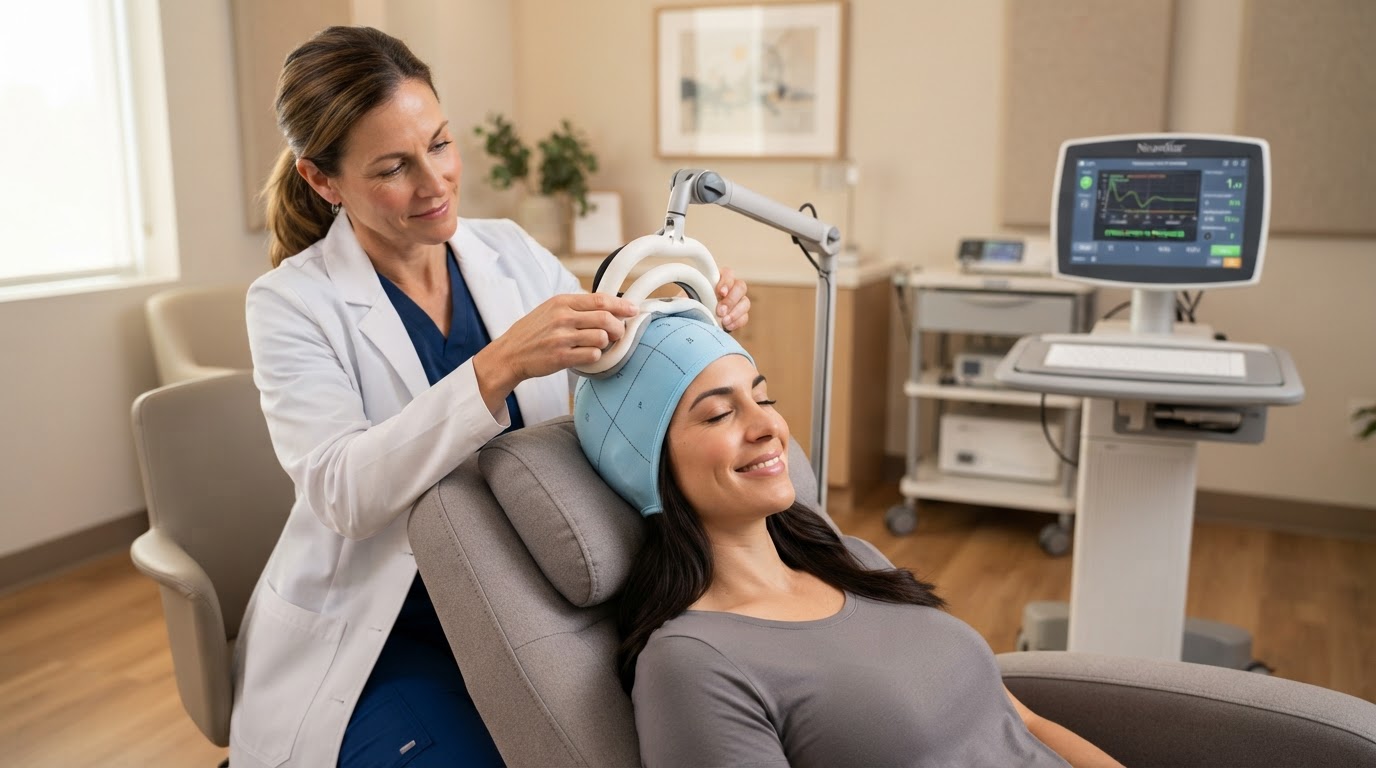
What Is Transcranial Magnetic Stimulation (TMS)?
Transcranial Magnetic Stimulation (TMS) is an advanced medical treatment cleared by the U.S. Food and Drug Administration (FDA) for adults diagnosed with Major Depressive Disorder who have not achieved adequate improvement from antidepressant medications.
Unlike traditional antidepressant medications that circulate throughout the bloodstream, TMS operates locally and non-systemically. It delivers focused, gentle magnetic pulses — similar in strength to an MRI machine — to stimulate the left dorsolateral prefrontal cortex (DLPFC), a region of the brain known to have decreased metabolic activity in individuals experiencing depression.
Key fact: Transcranial Magnetic Stimulation (TMS) is an in-person physical procedure that requires specialized clinical equipment and trained medical operators. It cannot be performed via telehealth.
- In-person TMS requires visits to a clinic equipped with TMS technology.
- Telepsychiatry can be used for the initial psychiatric evaluation and ongoing medication management, but the TMS sessions themselves must happen in person.
- Through our affiliated practice, DPS Health & Wellness, in-person TMS is available in Savannah and Statesboro, Georgia.
Key Advantages Over Medication Alone
Zero Systemic Side Effects
TMS does not enter the bloodstream, avoiding common medication complaints such as weight gain, sexual dysfunction, stomach upset, or dry mouth.
No Anesthesia or Sedation
You remain awake and alert throughout every session. You can drive yourself to and from the clinic and immediately return to your routine.
Quick Sessions
Treatments typically take between 19 and 37 minutes once daily, 5 days per week, over an average course of 6 to 7 weeks.
Lasting Neural Plasticity
Clinical trials suggest repeated stimulation may induce lasting synaptic changes, helping the brain establish healthy mood-regulating pathways.
Who May Be a Candidate for TMS Therapy?
TMS may be appropriate for adults who:
Candidacy is always determined by a qualified clinician based on a full evaluation.
Does Insurance Cover TMS Therapy?
Many major health insurance carriers — including Medicare and major commercial plans — provide coverage for TMS therapy when medical criteria for treatment-resistant depression are met. Coverage specifics vary by plan, so it's important to verify your benefits before beginning treatment.
Frequently Asked Questions About TMS
Does TMS therapy hurt?
Most patients report a gentle tapping sensation on the scalp during pulses, accompanied by a clicking sound. Any scalp sensitivity typically fades within the first 1 to 2 weeks of treatment.
How does TMS differ from ECT (Electroconvulsive Therapy)?
TMS is different from ECT. TMS does not require anesthesia, does not induce seizures, does not cause memory loss, and does not require a hospital setting.
Do I have to stop taking my current medications?
No. TMS is frequently administered alongside an existing psychiatric medication regimen. Always follow your prescribing clinician's guidance.
Explore TMS Resources
The Ultimate Guide to TMS Therapy
Our flagship, plain-language overview of everything TMS.
Antidepressants Not Working? Understanding Your Options
What treatment-resistant depression means and what comes next.
How Does TMS Therapy Work?
The science behind magnetic stimulation of mood-regulating circuits.
TMS Therapy Side Effects and Safety
What the research says about tolerability and safety.
TMS vs. Antidepressant Medication
How non-invasive brain stimulation compares to medication.
Does Insurance Cover TMS Therapy?
Coverage, prior authorization, and what to expect financially.
What to Expect During TMS Treatment
A walkthrough of a typical course of treatment, session by session.
Get Helpful Mental Health Information Delivered to Your Inbox
Receive educational articles, treatment updates, practical mental wellness tips, and free resources.
In-Person TMS in Georgia
Through our affiliated practice, DPS Health & Wellness, in-person TMS therapy is available at the Savannah and Statesboro clinics. Telepsychiatry evaluations are available statewide.
Savannah TMS Center
1692 Chatham Pkwy, Savannah, GA
Statesboro TMS Center
19 Coach Lee Hill Blvd, Statesboro, GA