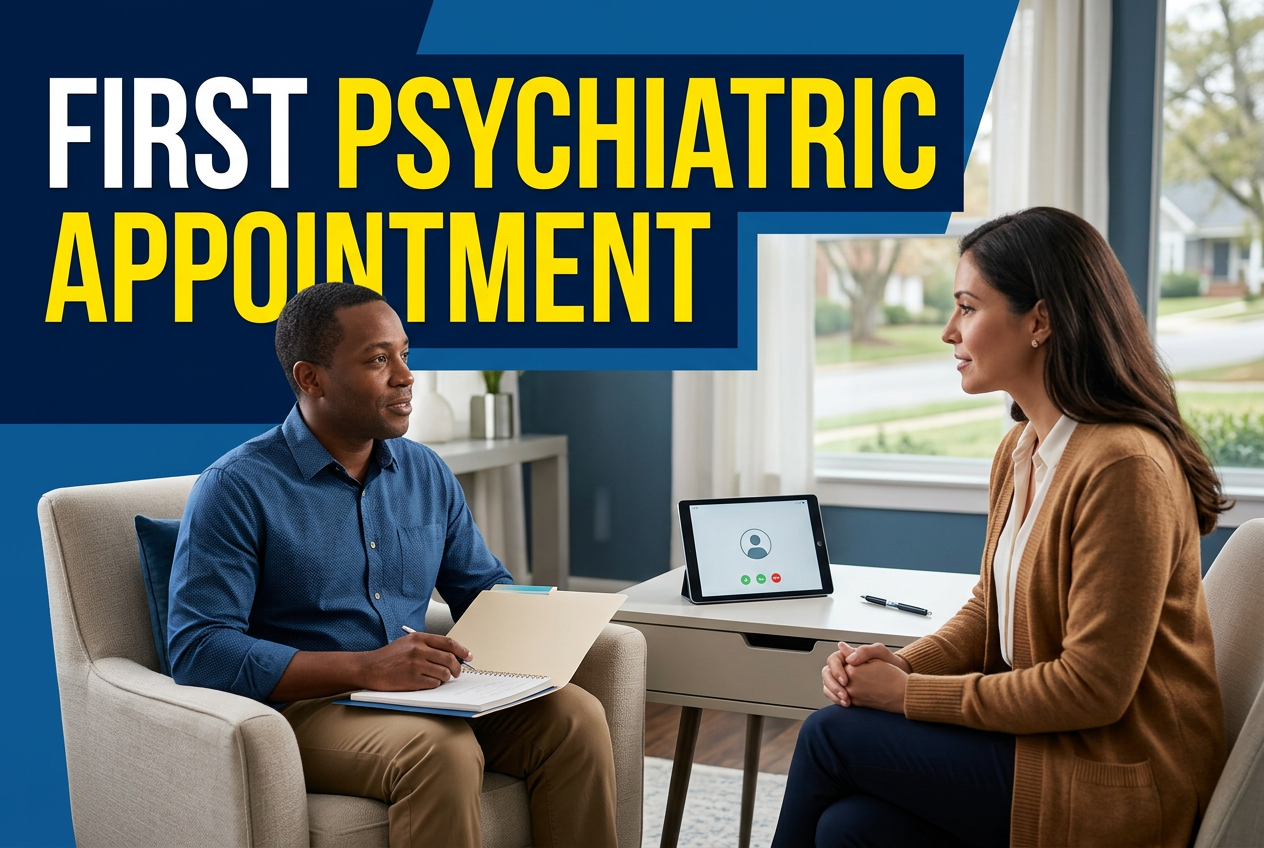
Preparing for a psychiatric evaluation in Milledgeville, GA can make it easier to explain what you have been experiencing and what kind of support you are seeking. An evaluation is a conversation and clinical assessment—not a test you need to pass. You do not have to arrive with the right words or know what diagnosis, if any, applies. Bringing a few useful details and questions can help you and the clinician make the most of the visit.
Key Takeaways
- Bring a current medication and supplement list, relevant health information, and any records you can easily access.
- Be ready to discuss symptoms, when they began, how they affect daily life, and what you hope will improve.
- A psychiatric evaluation may include questions about mental and physical health, sleep, substance use, and personal history.
- Recommendations depend on your needs and assessment; medication is not automatically required.
What Happens During a Psychiatric Evaluation?
A psychiatric evaluation helps a clinician understand your concerns, health history, current symptoms, and goals. The appointment often includes a detailed discussion and may use screening questionnaires. A questionnaire can help organize information, but it does not establish a diagnosis on its own.
You may be asked about changes in mood, anxiety, attention, sleep, appetite, energy, motivation, or behavior. The clinician may also ask when the concerns started, how often they occur, and whether they affect relationships, work, school, or everyday responsibilities. Sharing what has changed over time can be helpful, even if the changes seem small.
Questions about physical health, family history, past mental health care, medications, alcohol or other substance use, and major life events may also come up. These subjects can feel personal. You can ask why a question is relevant, request a pause, or say when you are not ready to discuss something. Accurate information helps the clinician consider possible explanations and appropriate next steps.
What to Bring to Your Appointment
You do not need to assemble a perfect file before seeking care. Bring what is available, and let the clinician know if something is missing. A short written list can be especially useful if you feel nervous or tend to forget details during appointments.
- Medication and supplement list: Include prescription medications, over-the-counter products, vitamins, and supplements, along with how you take them. If you are unsure of a name, a photo of the label may help.
- Relevant health information: Note significant medical conditions, allergies, previous mental health diagnoses, and past or current treatment, including therapy or psychiatric care.
- Symptom notes: Write down what you have noticed, when it began, how often it happens, possible triggers, and what seems to help or worsen it.
- Records, if available: You may bring previous evaluation summaries or treatment records. Ask how to share records securely if you do not have them with you.
- Questions and goals: List the issues you most want to address and what a useful next step would look like for you.
If a family member or other support person helps you remember details, consider asking whether you can include them. Your preferences, privacy, and consent matter. If the appointment is remote, check beforehand how to connect and choose a private place where you can speak comfortably.
What to Discuss With the Clinician
Start with the concern that brought you in, even if it feels difficult to explain. You might say, “I have not felt like myself,” or describe a specific change in mood, concentration, sleep, or daily functioning. It is also useful to mention what you would most like help with first.
Symptoms and their effect on daily life
Describe how symptoms affect your routines, relationships, responsibilities, and ability to care for yourself. If symptoms vary, explain when they are better or worse. Mention changes in sleep or energy, periods of unusually elevated or irritable mood, panic, difficulty focusing, or loss of interest when relevant. These details help the clinician understand the pattern rather than relying on a single moment.
Past treatment and preferences
Talk about treatments you have tried and how they affected you, including benefits, side effects, or reasons you stopped. Do not change or stop prescribed medication without consulting the prescriber. Tell the clinician about concerns such as side effects, cost, time, or difficulty following a treatment plan. Your preferences can help shape a realistic approach.
Safety and sensitive concerns
Be direct about thoughts of self-harm, suicide, or harming someone else, if these are present. Sharing this information helps the clinician assess safety and discuss support. If you are in immediate danger or may act on thoughts of harming yourself or another person, call 911 or go to the nearest emergency department. In the United States, you can call or text 988 for crisis support. DPS Health & Wellness is not an emergency or crisis service.
What May Happen After the Evaluation?
Depending on your concerns, the clinician may discuss a possible diagnosis, recommend additional information or follow-up, or outline treatment options. A clear diagnosis may take more than one appointment, particularly when symptoms overlap or more history is needed. You can ask what the clinician knows so far, what remains uncertain, and what the next step is intended to clarify.
Options may include ongoing psychiatric care, medication management, psychotherapy, lifestyle supports, or coordination with other health professionals. These approaches serve different purposes and may be considered individually or together. Medication is not necessary for every person, and a decision about medication should take your symptoms, health history, preferences, and potential benefits and risks into account.
For some people with depression that has not improved with other treatments, a clinician may discuss whether Transcranial Magnetic Stimulation (TMS) warrants evaluation. TMS uses magnetic pulses to stimulate targeted brain regions. It is not appropriate for everyone, is not a cure, and requires professional assessment. Possible side effects can include headache or discomfort at the treatment site; seizures are a rare but serious risk. Ask about candidacy, alternatives, safety screening, and practical requirements. Do not assume a particular treatment is available in a specific location without confirming it with the practice.
Before leaving, consider asking how follow-up works, who to contact with questions, what to do if symptoms worsen, and when you should expect to review the plan. If something is unclear, ask for it to be explained in everyday language.
Preparing for a Psychiatric Evaluation in Milledgeville, GA
Whether you are seeking support for a new concern or returning to care, preparation can help you communicate without needing to have everything figured out. You can bring notes, ask questions, and tell the clinician what feels most important. If you are comparing care options in Milledgeville, ask each practice about its evaluation process, available services, fees, and how follow-up is handled rather than assuming those details.
Frequently Asked Questions
Do I need a referral for a psychiatric evaluation?
Referral requirements vary by practice and insurance arrangements. Contact the practice and your health plan, if applicable, to ask what is needed before scheduling.
Will I receive a diagnosis at the first appointment?
Sometimes a clinician can offer an initial diagnosis, but a clear assessment may require more history or follow-up. The process depends on your concerns and the information available.
Should I bring someone with me?
You may bring a support person if the practice permits and you want their help. You can also ask to speak with the clinician privately for part or all of the appointment.
Does an evaluation mean I will be prescribed medication?
No. An evaluation helps clarify your needs and possible next steps. Medication may be discussed when appropriate, but treatment recommendations depend on an individual assessment and your preferences.
About DPS Health & Wellness
DPS Health & Wellness provides psychiatric and mental health services. To learn more about the practice and ask about its services and care process, visit dpshealthandwellness.com. Information about the practice does not confirm that a particular service is available in Milledgeville.
If you are considering a psychiatric evaluation in Milledgeville, GA, you can learn more about DPS Health & Wellness and contact the practice with questions about its services and next steps.
Learn More About DPS Health & Wellness
Watch: DPS Health & Wellness on YouTube
What to Expect at Your First Appointment With a New Psychiatric Provider