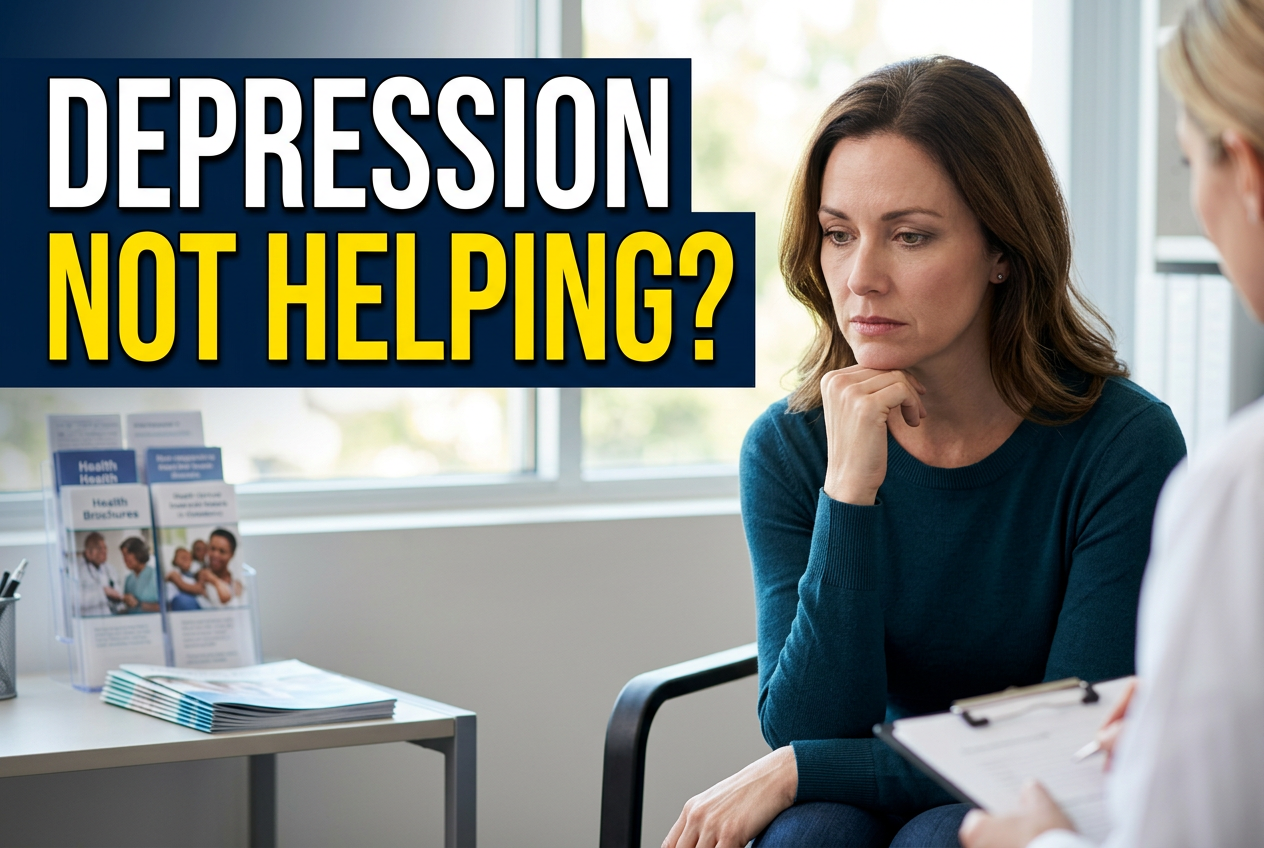
If depression treatment does not seem to be helping, it can be discouraging—but it does not mean that improvement is impossible or that you have done anything wrong. A conversation with a psychiatrist can help clarify what is affecting your progress and whether your care plan needs to be adjusted. If you are looking into depression treatment in Statesboro, GA, preparing a few observations and questions can help make that conversation more useful.
Key Takeaways
- Share which symptoms have changed, which have persisted, and how they affect daily life.
- A psychiatrist may review your diagnosis, treatment history, medications, health factors, and current stressors.
- Options may include a different treatment approach, psychotherapy, medication adjustments made with a prescriber, or—when appropriate—TMS.
- Do not stop or change prescribed medication without first talking with your prescriber.
Why Depression Treatment May Not Be Helping
Depression treatment is not always a quick or straightforward process. People can respond differently to the same approach, and it may take time to find a plan that fits their symptoms, health history, preferences, and daily circumstances. Sometimes a treatment needs more time or a closer review; other times, a different approach may be worth discussing.
It can also be difficult to tell whether treatment is helping. Some people notice better sleep or concentration before their mood improves. Others may experience partial relief while symptoms such as low motivation, sadness, or loss of interest continue to interfere with work, relationships, or self-care.
Tell your clinician if symptoms are worsening, returning, or changing. Also mention new or concerning effects you associate with treatment. These details can help guide a careful reassessment rather than a guess about what to do next.
What to Discuss With a Psychiatrist
Describe your symptoms and day-to-day functioning
Before an appointment, consider writing down what has been happening and when it began. Note changes in mood, energy, sleep, appetite, concentration, interest in activities, and ability to manage daily responsibilities. You do not need to track everything perfectly. A few specific examples can help explain what “not helping” means for you.
It may be useful to discuss whether symptoms are constant or come and go, whether anything makes them better or worse, and how they affect your relationships, work, school, or routine. Include any periods of unusually high energy, reduced need for sleep, or marked changes in mood. This information can help a clinician understand your experience and consider whether further evaluation is needed.
Review your treatment history and medication concerns
Bring a list of current medications, supplements, and past depression treatments if you can. Include how long you tried each treatment, what changed, and any side effects or practical barriers. If you have trouble remembering details, pharmacy records or notes may help.
Ask what benefits or side effects to monitor and when to follow up. If you are taking medication, do not stop, skip, or change it on your own; some medications can cause problems if stopped abruptly. Contact your prescriber to discuss concerns and possible next steps.
Mention health, sleep, and life circumstances
Physical health conditions, other medications, sleep difficulties, substance use, stress, grief, and major life changes can affect mood and treatment planning. Share what feels relevant, even if you are unsure whether it is connected. A psychiatrist may ask about these factors as part of understanding your overall health and deciding whether additional assessment or coordination of care is appropriate.
What a Psychiatric Evaluation May Involve
A psychiatric evaluation typically includes a discussion of your current concerns, symptom history, past treatment, health history, and goals. The clinician may ask about your sleep, mood, concentration, relationships, and daily functioning. They may also ask about family mental health history and safety. The purpose is to understand your needs and consider appropriate options—not to make assumptions based on one symptom.
Based on the evaluation, the psychiatrist may discuss whether the current diagnosis and plan still fit, whether other factors should be assessed, and what follow-up would be useful. You can ask why a particular option is being considered, what its potential benefits and risks are, and how progress will be reviewed.
Treatment Options to Ask About
Next steps depend on your evaluation and preferences. Options may include continuing a treatment with a clearer monitoring plan, changing the approach, or coordinating care with another mental health professional. Psychotherapy can be an important part of depression care for some people. Medication may be considered for some patients, but it is not necessary or appropriate for everyone. These approaches are not interchangeable, and a clinician can help explain how they may fit into an individual plan.
When TMS may be part of the conversation
Transcranial Magnetic Stimulation (TMS) uses magnetic pulses to stimulate targeted brain regions. It may be considered for certain people with depression after a professional evaluation of their symptoms, treatment history, health factors, and preferences. TMS is not appropriate for everyone, is not a cure, and should not be assumed to be available at every location.
Ask a qualified clinician about possible benefits, limitations, alternatives, and what an evaluation would involve. TMS can cause side effects, including scalp discomfort or headache; more serious risks, such as seizure, are uncommon but important to discuss. Your clinician can explain how potential risks apply to your circumstances and whether further assessment is needed.
Preparing for Follow-Up in Statesboro, GA
When seeking depression treatment in Statesboro, GA, you can make a short list of questions to bring to a psychiatric appointment. For example:
- What changes in my symptoms or functioning should I report?
- How will we decide whether my current treatment is helping?
- Could side effects, sleep, health conditions, or other factors be affecting my progress?
- What alternatives are reasonable to consider, and what are their potential risks and benefits?
- When should we check in again, and whom should I contact if symptoms worsen?
Follow-up is a chance to review your response and discuss concerns. If a plan is changed, ask what to expect and when to seek guidance. Treatment decisions should be made with a qualified professional who understands your individual situation.
When to Seek Urgent Help
If you are thinking about suicide or feel unable to keep yourself safe, call or text 988 in the United States for crisis support. If there is immediate danger or a medical emergency, call 911 or go to the nearest emergency department. DPS Health & Wellness is not an emergency or crisis service.
Frequently Asked Questions
Does treatment not helping mean I have treatment-resistant depression?
Not necessarily. A clinician needs to review your symptoms, diagnosis, treatment history, and other relevant factors before using that term or recommending a next step. A lack of improvement is a reason to discuss your care, not to label yourself.
Should I stop taking medication if I do not feel better?
No. Do not stop or adjust prescribed medication without consulting your prescriber. Contact them to discuss your symptoms, concerns, side effects, and options for a safe plan.
How soon should I follow up if symptoms continue?
Ask your prescriber what follow-up timing is appropriate for your treatment. Contact the care team sooner if symptoms worsen or you have concerning side effects. Seek urgent help if you may harm yourself or cannot stay safe.
Is TMS an option for everyone with depression?
No. TMS requires an individual clinical assessment, and it may not be suitable for every person. A clinician can discuss whether it is worth considering and explain potential risks, limitations, and alternatives.
About DPS Health & Wellness
DPS Health & Wellness provides psychiatric and mental health services. If you are exploring care, you can contact the practice to learn more about its services and whether they may fit your needs. Do not assume a specific treatment or in-person service is available in a particular location; ask the practice directly.
Learn More
If you are considering your next steps for depression care in Statesboro, Georgia, learn more about DPS Health & Wellness and the psychiatric and mental health services it provides.
Learn More About DPS Health & Wellness
Watch: DPS Health & Wellness on YouTube
What is TMS (TMS Therapy Statesboro Georgia)