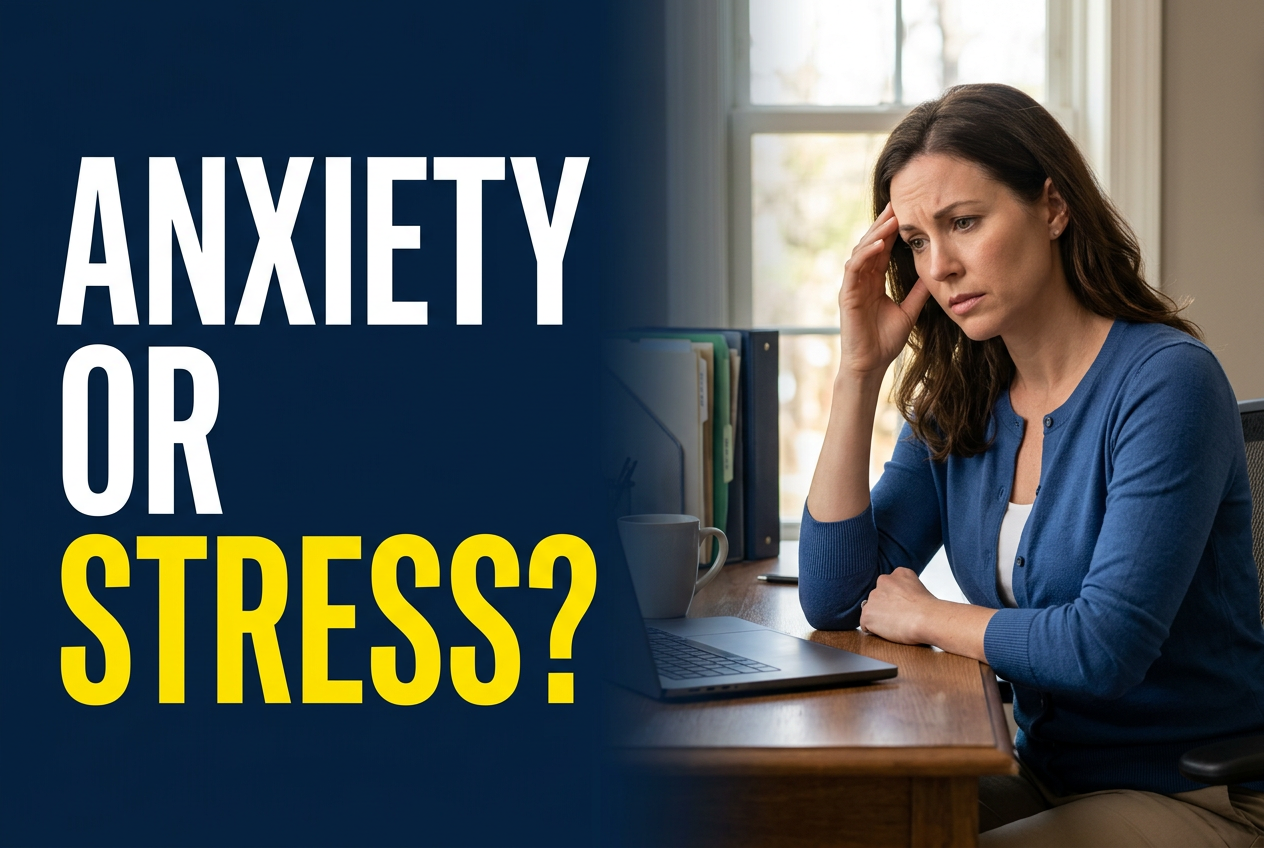
Stress is a normal response to challenges, but ongoing worry, fear, or physical tension can become difficult to manage. If you are looking for an anxiety evaluation in Thomasville, GA, understanding the difference between everyday stress and symptoms that may benefit from professional attention can help you decide what to do next. An evaluation is a conversation with a qualified clinician—not a judgment or automatic commitment to medication.
Key Takeaways
- Stress often relates to a particular situation; anxiety may persist, feel hard to control, or interfere with daily life.
- A psychiatric evaluation can explore symptoms, health history, daily functioning, and possible contributing factors.
- Treatment is individualized and may include therapy, medication, lifestyle supports, or a combination, depending on clinical assessment and preference.
- You can seek an evaluation even if you are unsure whether your symptoms meet criteria for an anxiety disorder.
Everyday Stress and Anxiety: What Is the Difference?
Stress commonly arises in response to an identifiable demand, such as a work deadline, family responsibility, financial concern, or major change. It may ease when the situation improves or when you have time to recover. Stress can still be intense and worth discussing with a professional, especially when it affects sleep, health, or relationships.
Anxiety involves worry, apprehension, or fear that may continue even when there is no immediate threat. It can be difficult to control and may affect concentration, decision-making, or the ability to take part in everyday activities. Anxiety symptoms do not by themselves establish a diagnosis; a qualified professional considers the full context.
Signs that an evaluation may be helpful
Consider speaking with a mental health professional if worry or fear is persistent, distressing, or disrupting your routine. Some people notice emotional symptoms, physical sensations, or both, including:
- Frequent or hard-to-control worry about different areas of life
- Feeling restless, tense, keyed up, or unusually irritable
- Difficulty concentrating or falling or staying asleep
- Muscle tension, a racing heartbeat, stomach discomfort, or shortness of breath
- Avoiding situations because of fear or concern about what might happen
- Repeated episodes of intense fear or panic
These experiences can have more than one explanation. A clinician can help assess whether anxiety, another mental health concern, a medical issue, medication effects, or a combination of factors may be involved.
What Happens During an Anxiety Evaluation in Thomasville, GA?
A psychiatric evaluation generally begins with a discussion of what brought you in. The clinician may ask when symptoms started, how often they occur, what seems to trigger or ease them, and how they affect work, school, relationships, sleep, and daily responsibilities. You can share what you feel comfortable discussing and ask for clarification at any point.
The evaluation may also cover your personal and family health history, current and past medications, substance use, sleep, and previous mental health care. These questions help the clinician understand your situation and consider relevant contributing factors. Depending on your symptoms and history, the clinician may recommend speaking with another health professional or seeking a medical assessment.
An evaluation is not always a single conversation that settles every question. The clinician may ask follow-up questions or recommend monitoring symptoms over time. You can also discuss your goals—for example, sleeping better, feeling less overwhelmed, or being able to return to activities you have been avoiding.
Questions you may want to ask
- What might be contributing to the symptoms I described?
- What treatment options could fit my needs and preferences?
- What are the potential benefits, limitations, and risks of those options?
- How will we know whether the plan is helping?
- Who should I contact if symptoms change or I have concerns between visits?
What Care Options Might Be Discussed?
Recommendations depend on the evaluation, your preferences, health history, and the effect symptoms are having on your life. Options may include psychotherapy, psychiatric medication management, practical coping strategies, or a combination. These approaches are not interchangeable, and medication is not necessary for everyone.
Psychotherapy can help people understand patterns in worry and practice ways to respond to difficult thoughts, feelings, or situations. A psychiatric clinician may also discuss whether medication could be appropriate, including possible benefits, side effects, and the need for follow-up. Do not start, stop, or change prescribed medication without guidance from the prescribing professional.
Sleep routines, regular physical activity, limiting substances that worsen symptoms for you, and stress-management practices may support well-being. They do not replace an assessment or treatment when symptoms are significantly affecting your life. If you already have a primary care clinician, you may wish to discuss relevant physical symptoms or health concerns with them as well.
Seeking Care in Thomasville
You do not have to wait until anxiety feels unbearable to ask for help. If worry or physical tension is persistent, getting worse, or making it difficult to manage daily responsibilities, a professional evaluation may help clarify what support could be useful. It can also be appropriate to seek guidance when you are uncertain whether your experience is stress, anxiety, or something else.
When researching care in Thomasville, ask the practice what services are available to you, whether appointments can be conducted by telepsychiatry, and what to expect from the evaluation and follow-up. Availability and the suitability of a particular service can vary; confirm details directly with the practice.
Frequently Asked Questions
Does asking for an evaluation mean I will be diagnosed with an anxiety disorder?
No. An evaluation is a chance to discuss symptoms and consider possible explanations. The clinician may identify an anxiety disorder, another concern, contributing factors, or a need for more information.
Do I need to take medication if I have anxiety?
Not necessarily. Care is individualized. A clinician can explain potential treatment options, including psychotherapy and medication when appropriate, and discuss benefits and risks with you.
What should I prepare for an appointment?
You may find it helpful to note when symptoms occur, how they affect your routine, questions you want answered, and any medications or supplements you use. You do not need to have everything figured out before you talk with a clinician.
When should I seek urgent help?
If you are thinking about suicide or feel unable to stay safe, call or text 988 in the United States for the Suicide & Crisis Lifeline. If there is immediate danger or a medical emergency, call 911. DPS Health & Wellness is not an emergency or crisis service.
About DPS Health & Wellness
DPS Health & Wellness provides psychiatric and mental health services. If you are considering an anxiety evaluation in Thomasville, contact the practice to learn about its services and whether a particular care option is appropriate and available for your needs. More information is available at dpshealthandwellness.com.
Anxiety symptoms can be difficult to sort through on your own, and seeking information is a reasonable first step. Learn more about DPS Health & Wellness and the services you may wish to discuss.
Learn More About DPS Health & Wellness
Watch: DPS Health & Wellness on YouTube
Why Narcissists Return After You Leave