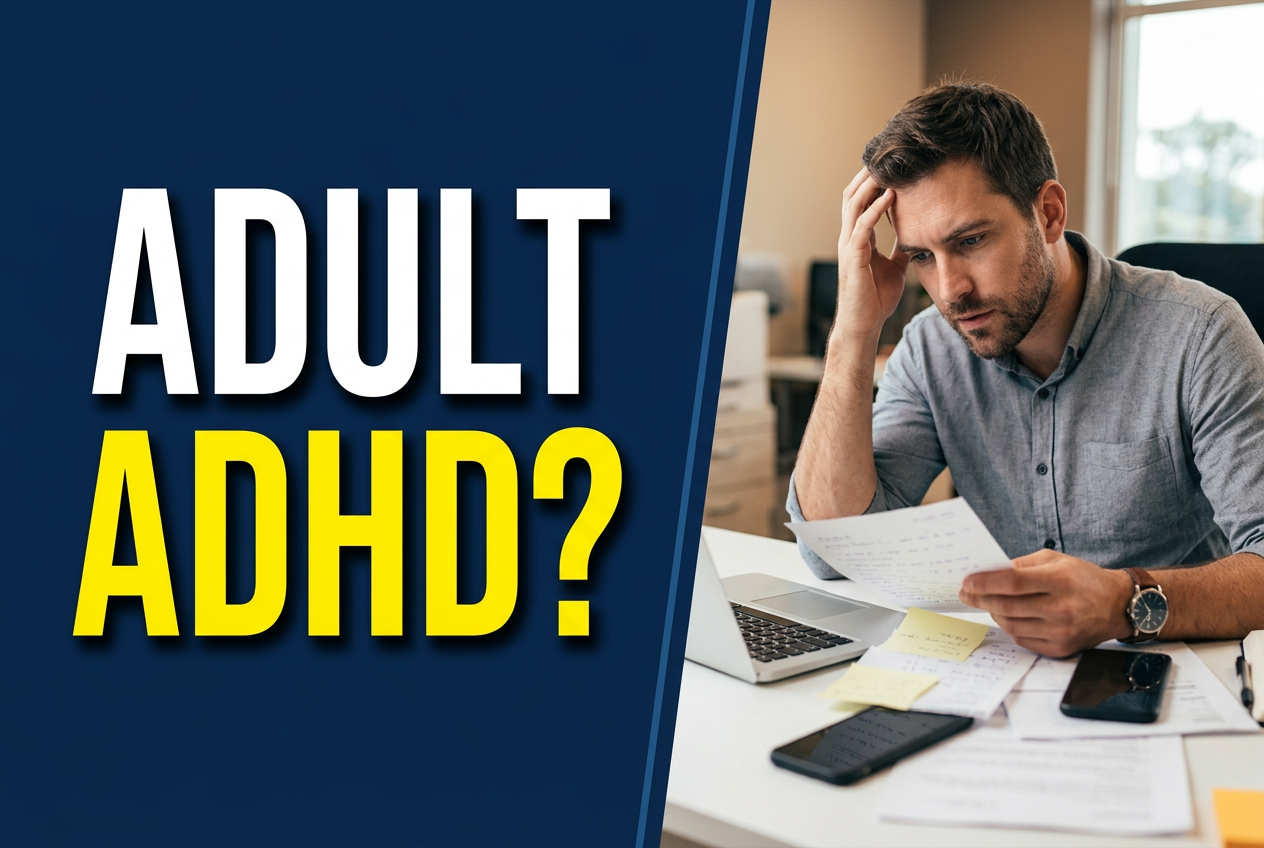
Restlessness and difficulty concentrating can occur with both anxiety and attention-deficit/hyperactivity disorder (ADHD). They may also have other causes, and having these symptoms does not by itself identify which condition is responsible. If you are considering an adult ADHD evaluation in Thomasville, GA, a psychiatric evaluation can help explore when symptoms began, how they affect daily life, and what other factors may be involved.
Key Takeaways
- Anxiety and ADHD can both affect focus, task completion, and feelings of restlessness, but their patterns and histories may differ.
- Adult ADHD assessment generally considers symptoms from childhood, functioning in more than one setting, and other possible explanations.
- A psychiatric evaluation may include questions about mental health, sleep, health history, medications, and substance use.
- Treatment is individualized; options may include therapy, practical strategies, and, for some people, medication after a clinical discussion.
Why Anxiety and ADHD Can Feel Similar
When attention is hard to sustain, tasks pile up, or the mind feels constantly active, it can be difficult to know what is behind the experience. Both anxiety and ADHD may interfere with work, school, relationships, household responsibilities, and rest. The conditions can also occur together, so an evaluation should not assume that one explanation rules out the other.
Symptoms that may overlap
People with anxiety may find it hard to concentrate because worry repeatedly pulls their attention away from the task at hand. Physical tension, feeling keyed up, and difficulty settling down can also contribute to restlessness. With ADHD, inattention, impulsivity, or hyperactivity may make it difficult to organize tasks, stay on track, wait, or sit still.
Some people describe both experiences: they may lose track of tasks and then feel anxious about missed deadlines or unfinished responsibilities. A clinician will look beyond a single symptom, such as trouble focusing, and consider the broader pattern and timeline.
Clues a Psychiatric Evaluation May Explore
There is no single question or test that can determine whether an adult has ADHD. Assessment usually involves a clinical conversation about symptoms, history, and their effects on daily functioning. A provider may consider established diagnostic criteria and use rating scales or other assessment tools as part of the process. Those tools can inform an evaluation but do not replace clinical judgment.
When symptoms began and where they occur
ADHD is a neurodevelopmental condition, so an evaluation generally explores whether relevant symptoms were present in childhood, even if they were not recognized or diagnosed at the time. A clinician may ask about school experiences, early responsibilities, and feedback from family or teachers when that information is available. They may also ask whether symptoms occur in more than one setting, such as at home and at work.
Anxiety can begin at different points in life and may be connected to particular stressors or situations, though its course varies. The timing of symptoms can offer useful context, but it cannot establish a diagnosis on its own.
How symptoms affect everyday life
Expect questions about practical effects: Is it difficult to finish tasks, remember appointments, manage time, or follow conversations? Do worry or physical tension interrupt concentration? Are responsibilities being missed, or are relationships affected? Specific examples can help make the discussion more useful. You may wish to note when difficulties happen and what makes them better or worse before your appointment.
Other factors that may affect attention or restlessness
Sleep problems, depression, trauma-related symptoms, stressful life circumstances, medication effects, substance use, and some health conditions can influence concentration, energy, or restlessness. A psychiatric evaluation may explore these possibilities and your overall health history. If another medical assessment is appropriate, the clinician can discuss next steps; no one should assume that every attention problem is ADHD or anxiety.
What to Expect During an Adult ADHD Evaluation in Thomasville, GA
An evaluation is a conversation, not a test you need to “pass.” You can expect questions about current concerns, personal and family mental health history, previous treatment, medications, sleep, and functioning at home, work, or school. Depending on the situation, a provider may ask whether relevant records or input from someone who knows you well could add helpful context. Sharing this information is your choice, and you can ask how it will be used.
It may take more than one conversation to understand a complicated history. The outcome may be a diagnosis, a recommendation for further assessment, or a discussion of other explanations and supports. You can ask the clinician to explain their reasoning and what remains uncertain.
Treatment Considerations
Care depends on the evaluation findings, your goals, health history, and preferences. If anxiety is a significant concern, a clinician may discuss psychotherapy, coping strategies, and whether medication is appropriate. ADHD care may involve practical approaches to organization, routines, and planning; psychotherapy may help with related challenges. Medication can be considered for some people, but it is not necessary or appropriate for everyone.
If medication is discussed, ask about expected benefits, potential side effects, interactions, monitoring, and how progress will be reviewed. Do not start, stop, or change a prescribed medication without guidance from the prescriber. Treatment for anxiety and ADHD is not interchangeable, and a person with both conditions may need a plan that addresses each concern.
Follow-up helps assess whether the plan is useful and tolerable. You can bring questions about daily functioning, side effects, or new concerns to those discussions. Improvement may take time, and treatment approaches can be adjusted with professional guidance.
Questions to Bring to Your Provider
- What parts of my history support or do not support ADHD, anxiety, or both?
- Could sleep, another health concern, medication, or stress be affecting my concentration?
- What additional information or assessment, if any, would help clarify the picture?
- What treatment options fit my goals, and what are their possible benefits and risks?
- How will we follow up and evaluate whether the plan is helping?
Frequently Asked Questions
Can anxiety cause symptoms that look like ADHD?
Yes. Worry can interrupt concentration, and anxiety may involve tension or feeling restless. A clinician considers symptom patterns and history rather than relying on one symptom to distinguish conditions.
Can an adult have both anxiety and ADHD?
Yes, both may be present. An evaluation can explore each set of symptoms and how they affect functioning so that care can be considered appropriately.
Does an ADHD evaluation always include medication?
No. Evaluation is intended to understand symptoms and possible explanations. Medication is one option that may be discussed for some people, but treatment decisions depend on clinical assessment and individual preferences.
What should I prepare before an evaluation?
Consider writing down examples of concentration, organization, worry, or restlessness concerns; when you first noticed them; and how they affect daily life. If available and relevant, past records may also provide context. You can ask the provider in advance what information would be useful.
Exploring Care in Thomasville
If symptoms are interfering with daily responsibilities, relationships, or well-being, speaking with a qualified mental health professional can be a reasonable next step. People in Thomasville seeking an adult ADHD evaluation can ask a prospective provider about assessment procedures, follow-up, and whether care options are appropriate for their needs. Availability and the right type of care can vary, so confirm details directly with the practice.
About DPS Health & Wellness
DPS Health & Wellness provides psychiatric and mental health services. To learn more about the practice and ask whether its services may fit your needs, visit the website. Do not assume a particular service or appointment option is available in Thomasville without confirming it with the practice.
Learn More About DPS Health & Wellness
Watch: DPS Health & Wellness on YouTube
The Okinawa Secret and it's Not Diet